Faecal Calprotectin Test
Key points
- Faecal calprotectin (FC) is a protein released by white blood cells when there is inflammation in the gut.
- The FC test can be a non-invasive alternative to colonoscopy, used to help tell apart IBD and IBS, monitor disease activity, and check whether treatment is working.
- Several factors such as using anti-inflammatory painkillers can affect your FC results.
- The test is listed on the Medicare Benefits Scheme (MBS), meaning eligible patients will generally receive the test for free.
What is faecal calprotectin (FC)?
Calprotectin is a protein released by white blood cells when there is inflammation in the gut. When inflammation occurs, these cells move into the bowel lining and release calprotectin. The calprotectin ends up in faeces (poo or stool). The more inflammation present, the more calprotectin will be detected.
What is the faecal calprotectin test?
The FC test is a stool test that measures the amount of calprotectin in your stool. It can be referred to as the “poo pot test” in some clinics. It provides a simple, non-invasive way to detect inflammation in the bowel, without the need for a colonoscopy or imaging test as often. You’ll collect a small stool sample at home using a kit from your doctor or pathology centre. The sample is then sent to a laboratory for testing.
Why is it used for IBD?
Telling apart inflammatory bowel disease (IBD) and irritable bowel syndrome (IBS).
- IBD involves inflammation and often damage to the bowel lining.
- IBS doesn’t involve this kind of inflammation, even though it can cause similar symptoms like pain, bloating, and changes in bowel habits.
- Because higher FC levels can indicate inflammation in the bowel, the test can help doctors tell if IBD or IBS is more likely and whether a colonoscopy is needed.
Monitoring disease activity.
- For people already diagnosed with IBD, FC can help track how active the disease is over time. Rising FC levels can be an early sign of a flare, sometimes appearing before symptoms are obvious. This means treatment adjustments can happen sooner.
Checking how treatment is working.
- If you’re taking medication for IBD, FC testing can show whether inflammation is improving. This can help your doctor decide whether your treatment is working or needs to change.
Deciding on next steps.
Depending on your FC results, your doctor may:
- recommend further tests,
- review your medication,
- or make changes to your treatment plan.
What can affect results?
Higher FC levels can be caused by conditions other than IBD. These include some infections, certain medications, and other bowel conditions. Anti-inflammatory pain killers (NSAIDs) such as ibuprofen are known to affect results. If possible, collect your sample at least four weeks after stopping NSAIDs. This is one reason your doctor will always interpret your results alongside your symptoms and history, rather than as a number on its own.
What are the limitations of the test?
FC testing is a useful tool, but it has limitations.
- It cannot confirm an IBD diagnosis on its own
- It can’t tell the difference between Crohn’s and ulcerative colitis
- Results can be affected by infections, medications and other bowel conditions
More tests, such as blood tests, imaging, or colonoscopy, may still be needed.
Who can order the test?
The FC test can be requested by a GP or specialist gastroenterologist. FC testing is listed on the Medicare Benefits Scheme (MBS), meaning eligible patients can receive a Medicare rebate. There are some restrictions on the rebate, but your doctor can advise you about this.
How much does it cost?
For eligible patients, a Medicare rebate applies. There are generally no out-of-pocket costs, but this can vary depending on the pathology provider and your individual circumstances. Talk to your GP or pathology center about what you can expect to pay or check MBS online for current information.
The three listed MBS items are:
How is the test done?
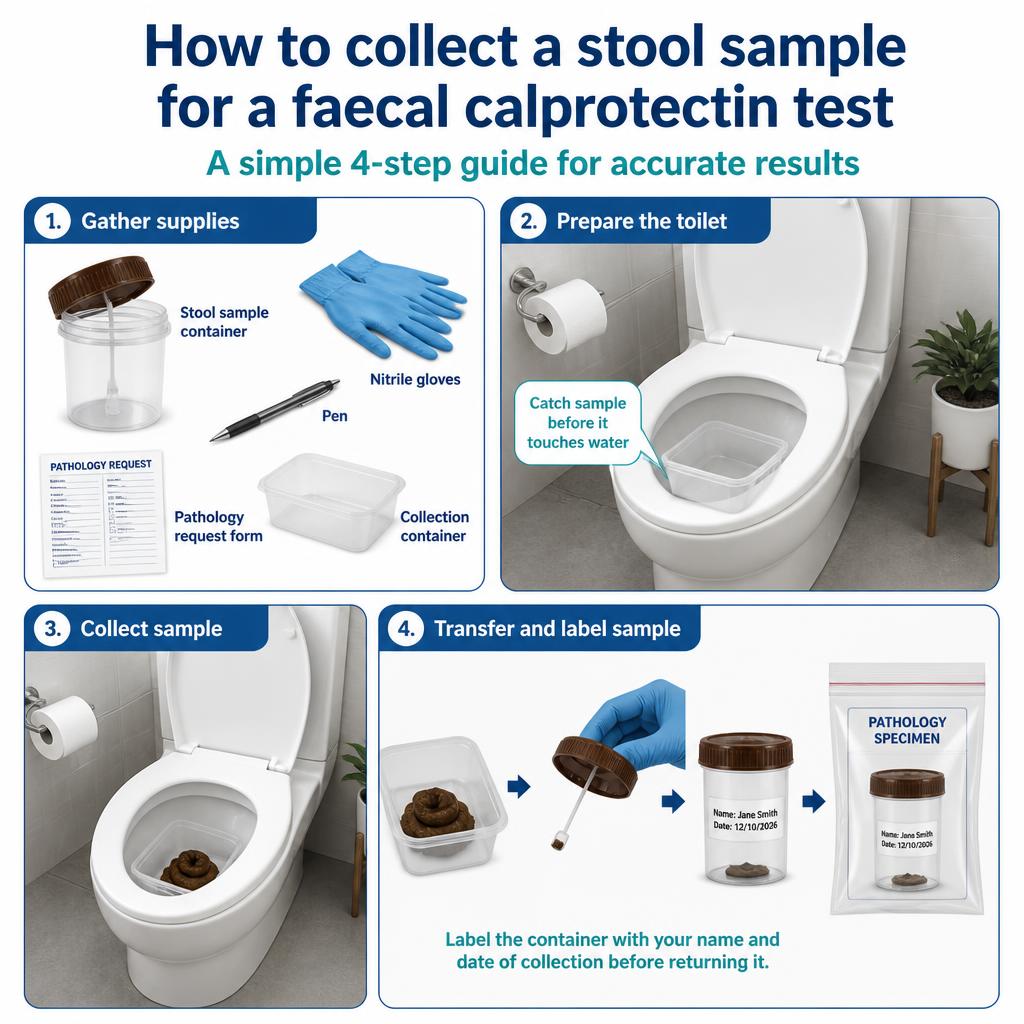
Your doctor or pathology provider will give you a collection kit. It usually includes a small sample pot, a collection tool, and instructions. Some centers may provide additional equipment such as a collection tray (a small tray that sits in the toilet bowl to help catch the sample). Collection trays are not always available, but it’s worth asking for it as it can be helpful. If one isn’t available, see the collection tips below.
You’ll collect a small amount of stool at home, and return it to a pathology collection center, or in some cases mail it in.
Getting organised beforehand
- Ask the center requesting the test what supplies are available, as not all centers stock the same equipment. You may also ask for nitrile gloves.
- Check with your pathology provider how long you have to drop off or post the sample after collection.
- If there is a delay, store the sample in the fridge. Do not freeze the sample.
- Have all the materials you’ll need in the bathroom with you before you start. You want to collect the sample as soon as possible after passing a stool.
- Empty your bladder before collecting the sample. Urine or toilet water can contaminate your sample.
- Have a pen ready to label the sample clearly with your name and date of collection.
If you’re unsure about anything, your GP or pathology service can talk you through it.
Collection Methods: Tips from our community
The biggest challenge is collecting the stool before it comes into contact with the toilet water. Here are a few methods our community has tried:
- Place a disposable shallow plastic container (like a clean ice cream container) in the toilet bowl to catch the sample (see the image below). Dispose of the container in the bin when you’re done.
- Stretch a layer of glad wrap across the toilet bowl before you go. Collect the sample. Dispose of the glad wrap in the bin when you’re done.
- Put baking paper between the toilet bowl and seat. It can make it easier to move the sample to a flat surface. Dispose of the paper in the bin when you’re done.
- Before disposing of the stool, place some toilet paper in the bowl to reduce splashing.
Understanding your results
Your results will be interpreted alongside your symptoms and any other test result by the team who ordered the test. You should expect to hear back from them rather than follow up yourself. Your result will also appear in your My Health Record, so you can view it there at any time.
As a general guide, FC levels are often interpreted as follows:
| FC level (µg/g) | What it may indicate |
| <50 | Low likelihood of inflammation |
| 50-250 | Borderline (further investigation may be needed) |
| 250-500 | High likelihood of inflammation (e.g. active IBD) |
| >500 | Severe inflammation (strongly suggestive of active IBD) |
Please note: reference ranges can vary between pathology labs. These values are a general guide only and should not replace advice from your doctor or specialist.
Depending on your result, your doctor may recommend further tests, a review of your medication, or a referral to a specialist. It’s always best to talk through your results with your GP or specialist.
If you found the information here helpful, you might be interested in joining us as a member of Crohn’s & Colitis Australia. Learn more about membership here.