Gastroscopy (Upper Gastrointestinal Endoscopy)
Key points
- A gastroscopy is a procedure that uses a thin, flexible tube with a camera to examine the oesophagus, stomach and first part of the small intestine (duodenum).
- A gastroscopy may help diagnose Crohn’s disease affecting the upper digestive tract, investigate symptoms such as nausea, vomiting, upper abdominal pain, reflux, trouble swallowing, anaemia or bleeding, and take biopsies to confirm what is going on.
- Unlike colonoscopy, gastroscopy is not usually done on a routine schedule for most adults with IBD. It is more often used when there are symptoms, warning signs, or a specific clinical reason.
- Gastroscopy is generally very safe, but like any procedure it has small risks, including bleeding, perforation, and reactions to sedation.
What is a gastroscopy?
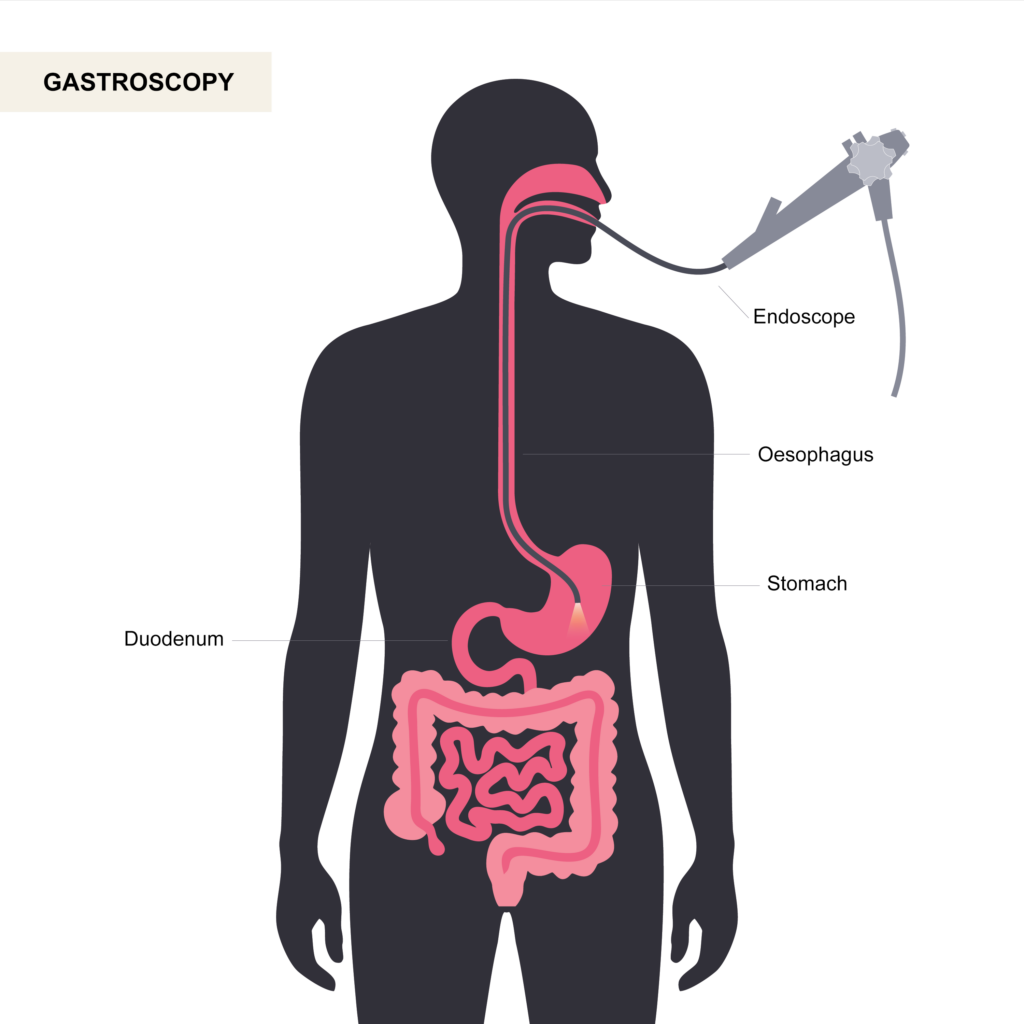
A gastroscopy is sometimes referred to as upper endoscopy or upper gastrointestinal (GI) endoscopy. It’s a procedure that allows a specialist to look inside the upper part of the digestive tract (including the oesophagus, stomach, and duodenum) as shown in the image.
It’s done using a long, thin, flexible tube with a light and camera on the end. The tube is passed through the mouth and down into the upper GI, where the specialist will look for inflammation, ulcers, narrowing, bleeding, or other abnormalities. They may also take biopsies (small tissue samples), which can help confirm inflammation, rule out other conditions such as coeliac disease or infections, and give more information about whether Crohn’s disease is affecting the upper gut.
Why do I need a gastroscopy?
If you live with IBD or your doctor suspects IBD, there are several reasons you may be advised to have a gastroscopy. It can be used to:
- Help diagnose Crohn’s disease, especially if there is concern that inflammation is affecting the upper digestive tract.
- Investigate symptoms such as nausea, vomiting, upper abdominal pain, reflux, indigestion, difficulty swallowing, poor growth, anaemia, or bleeding.
- Take biopsies to help distinguish IBD from other causes of symptoms including infection, coeliac disease, ulcers, or other conditions. Biopsies can also show microscopic changes even when the lining looks normal on camera.
How often should I get a gastroscopy?
For most adults with IBD, gastroscopy is not done on a routine schedule. Your specialist will recommend it when there is a specific clinical reason such as:
- You are having upper digestive symptoms (such as pain, nausea, reflux or difficulty swallowing)
- There is concern Crohn’s disease is affecting the upper GI tract
- You have unexplained bleeding, iron deficiency or anaemia
- There is a need to rule out another condition
- The result is likely to change treatment or management.
For children and adolescents, the approach is different. International paediatric guidelines recommend gastroscopy alongside colonoscopy as part of the initial diagnostic work-up for suspected IBD- even when upper GI symptoms are not present.
What will I need to do to prepare?
You need an empty stomach for the procedure to be safe and accurate. Have nothing to eat or drink, including water, for at least 6 hours before the procedure. Your hospital or specialist may give you more specific instructions depending on the time of day and your medications.
You should tell your doctor well before the procedure if you:
- Take blood thinning medicines
- Take insulin or diabetes medication
- Have heart or lung disease
- Have allergies to medicines
- Have had problems with sedation or anesthetic in the past
If you are taking GLP-1 receptor agonists (e.g. Ozempic, Wegovy or Mounjaro) or diabetes medications such as glifozins, let you doctor know well in advance as there may be additional fasting instructions.
Your medical team will let you know which medicine to take as usual, and which may need to be adjusted or temporarily stopped. Always follow instructions given by your own specialist or hospital.
Tips to make a gastroscopy more comfortable
Gastroscopy is generally well-tolerated, but it is normal to feel a little anxious beforehand. Here are a few things that can help:
- Arrange for someone to drive you home and stay with you for 24 hours after the procedure
- Don’t plan anything for the rest of the day. Give yourself time to rest and recover at home
- Let the team know if you’re feeling anxious. They can talk you through what to expect.
- A mild sore throat afterwards is common. Throat lozenges or warm drinks (once you’re cleared to eat and drink) can help.
- Some people feel a little bloated or gassy after the procedure due to air introduced during the gastroscopy. This usually passes quickly.
What happens during the gastroscopy?
You will usually lie on your left side. The team will place a mouthguard between your teeth to prevent you from biting down on the tube. The doctor will pass the gastroscope gently through your mouth, down the oesophagus, into the stomach and duodenum. The scope does not block your breathing. The doctor may introduce some air to improve the view, which can make you feel temporarily bloated.
Gastroscopy is usually performed in a hospital or an outpatient endoscopy center. Before the procedure, you will be given a sedative through a drip to help you relax and feel comfortable. Some people are more awake than others, and most remember very little afterwards. Some awareness during endoscopy is safe and intended, and a general anaesthetic is not usually intended or necessary for this procedure.
The procedure may take 10-30 minutes, depending on what is being examined and whether biopsies are taken. If your doctor takes biopsies, you generally won’t feel them.
What happens after the gastroscopy?
After the procedure, you will stay in recovery while the sedation wears off. Many people feel sleepy, bloated, mildly nauseated, or have a sore throat for a short time. These symptoms usually settle quickly.
Your specialist will usually give you a summary of results on the day. If biopsies were taken, ask your doctor when to expect to get your results.
Since a sedative is used during the produce, it’s important that for the remainder of the day you avoid:
- Signing important documents.
- Driving.
- Operating machinery.
- Taking public transport alone.
- Drinking alcohol.
Is the process different for children?
In children, gastroscopy is commonly performed under general anesthetic, meaning your child will be fully asleep for the procedure, rather than just sedated, as is typical for adults. It is also more likely to be included as part of the initial assessment for IBD, even when there are no clear upper GI symptoms.
Your team will give parents and carers fasting instructions before the procedure. Most children go home on the same day, rest for the remainder of the day, and return to usual activities soon after.
What are the risks?
Gastroscopy is generally very safe when performed by trained clinicians, but complications can happen. These may include:
- Sore throat.
- Bloating.
- Minor Bleeding, especially if biopsies are taken.
- Reaction to sedation, including breathing or heart problems.
- Damage to teeth.
- Infection.
- Tearing in the lining of the upper digestive tract (known as perforation).
Serious complications are rare. Bleeding after a standard gastroscopy is usually minor and often settles on its own without treatment.
Your specialist should help you understand the likelihood of these risks and the benefits of the procedure so that you can make an informed decision before proceeding.
When should you seek help?
Contact your doctor, endoscopy unit, or seek urgent medical care if you develop any of the following after a gastroscopy:
- Fever
- Trouble swallowing or throat pain that is getting worse
- Chest pain
- Worsening abdominal pain
- Vomiting blood, or vomit that looks like coffee grounds
- Black stools
- Shortness of breath
- Any other symptoms that worry you.
How much will I have to pay?
The cost of a gastroscopy in Australia can vary a lot depending on whether you are treated in the public or private system, where the procedure is done, and whether there are separate fees for the specialist, anesthetist, pathology and the hospital or day procedure centre.
If you have a Medicare card and the procedure is performed in a public hospital, there is no cost to you. However, wait times are extremely variable and can range from one month to several years. How urgently you are seen depends on your symptoms, test results, and whether you are already being seen by an IBD team. People with more urgent or complex presentations are generally prioritised and seen sooner.
If you are waiting for an appointment in the public system, it’s important to keep seeing your GP in the meantime. If your symptoms get worse or new test results come back showing increased inflammation or other concerns, your GP can contact the relevant team to have your urgency category reviewed.
If you have private health insurance, you can usually be seen sooner, but there may be out of pocket costs. The Medical Costs Finder shows that 75% of people with private health insurance who had a gastroscopy had no out-of-pocket costs at all. Of the 25% who did, the typical fee was around $170, with costs ranging from as low as $10 up to $410.
Hospital fees (typically around $600) are separate, and usually covered by your private health insurance, though your policy’s excess or co-payments may apply. There may also be an anaesthetist fee; of those who had an out-of-pocket anesthetist cost, the typical amount was $100.
Contact your private health fund with the item codes provided by your specialist to confirm what you’ll need to pay.
You can also pay for the procedure privately. You should always be provided with clear information about the costs of the procedure so you can provide financial consent.
Other resources
Medical cost finder provides a good overview of the typical fees and costs associated with a gastroscopy.
The Gastroenterogical Society of Australia has a printable resource explaining the preparation, process and aftercare of a gastroscopy.