Cinnamon and benzoate free diet for Orofacial Granulomatosis
Key points
- A cinnamon and benzoate free diet can support the management of orofacial granulomatosis (OFG)
- The diet removes cinnamon, benzoate and their derivatives for 8-12 weeks
- Foods are reintroduced gradually to assess individual triggers

This dietary resource developed by GI DREAM provides general dietary information on a cinnamon and benzoate free diet for Orofacial Granulomatosis – a condition often found alongside Crohn’s disease.
What is orofacial granulomatosis?
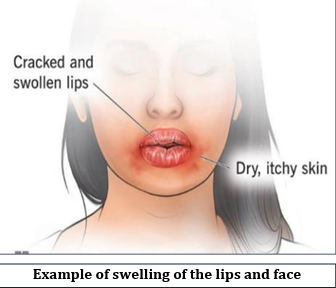
Orofacial granulomatosis (OFG) is a rare, long-term inflammatory condition that causes swelling in the mouth and face, particularly the lips. While OFG can sometimes occur on its own, some people will also have or develop Crohn’s disease. The cause of OFG is unknown. It may have an allergic basis, although allergy testing is not always accurate.
OFG is diagnosed by a healthcare provider who might do a combination of assessments, including your medical history, physical examination and biopsy.
Additional tests, such as blood tests and allergy testing can help rule out other conditions.
How is it managed?
Treatment usually involves a combination of diet changes, medications, injections, and sometimes surgery. Avoiding certain food additives and preservatives, like benzoic acid and cinnamon, can help reduce symptoms in some people. In some severe cases, medications that reduce inflammation or suppress the immune system might be needed. Managing OFG often requires a team of specialists, including dentists, dermatologists and gastroenterologists, dietitians, and sometimes surgeons.
What is the cinnamon and benzoate free diet?
A cinnamon- and benzoate-free diet is a therapeutic diet trialled with the support of your healthcare team in adjunct to your medication. This dietary strategy might help reduce the inflammation and swelling in the mouth and lips.
The diet avoids foods and drinks containing cinnamon, benzoates and their derivatives. These can be found naturally in some whole foods (such as avocado, spinach, berries, dried fruits, and some herbs and spices like cinnamon sticks and powder) and added as preservatives in many processed and packaged foods. For example, benzoates are often used in soft drinks, salad dressings, canned fruit and fruit juices, and processed meats. Cinnamon is often used in bakery products and can be labelled as spice or mixed spice.
Consider eating minimally processed foods that are naturally low in benzoates and cinnamon. The diet can be challenging to implement, but it can be personalised to suit the individuals’ level of sensitivity. An experienced IBD dietitian can provide individualised support and guide the elimination and reintroduction of foods and beverages
How long should I follow this therapeutic diet for?
The diet has two phases. In phase one, foods, drinks and other products containing cinnamon and benzoate are eliminated for 8-12 weeks. If there is good symptomatic response, foods and drinks that were eliminated are gradually reintroduced in phase two, to identify dietary triggers. Your dietitian can help you follow the diet and maintain balanced nutrition. The foods removed are gradually reintroduced to test your response.
How do I know if it works?
You can keep a food and symptoms diary and note any changes you notice with the diet. You can check in with your healthcare provider for changes in your condition. If you have not experienced any improvements in your symptoms, your healthcare provider might advise you to discontinue the diet. Not all people with OFG will experience improvement of their condition and additional therapies might be needed.
How do I implement the cinnamon and benzoate free diet?
Your dietitian will provide individualised guidance to help you implement the diet. Some practical strategies you can use include reading food labels.
Reading food labels
Reading the ingredients list on food labels can help you choose food that is suitable. The ingredients list can be found on the back, on the side or at the bottom of the pack.
The table below shows some common names for cinnamon and derivatives of benzoate found in packaged and processed foods.
| Cinnamon | Common names |
|---|---|
| Cinnamon is a spice used to add flavour to many dishes, packet foods and drinks. It can be listed on the ingredients list under different names. | Spices or Spice Extracts Ground Cinnamon Mixed Spice Cinnamon Oil Cinnamal or Cinnamic Aldehyde Cinnamaldehyde |
| Benzoates | Common names |
|---|---|
| Benzoates are commonly added to processed and packaged foods and drinks as preservatives (E210-218) and in some medications and supplements. Fresh, unprocessed foods contain benzoates but less than processed and packaged foods. | E210 or Benzoic Acid E211 or Sodium Benzoate E212 or Potassium Benzoate E213 or Calcium Benzoate E216 or Propyl 4-hydroxybenzoate or Propyl para-hydroxybenzoate E218 or Methyl 4-hydroxybenzoate or Methyl para-hydroxybenzoate |
Flavourings can sometimes be derived from cinnamon and benzoates. These are listed on the ingredients list, but the terms “flavouring” or “natural flavouring” can be used instead of naming the type of flavour used. To be safe, avoid products labelled with flavouring and natural flavouring.
Eating out
Eating out can be challenging but manageable with some planning and clear communication. Some cuisines use cinnamon as a spice in their dishes. These include Indian, Thai and Chinese. Other cuisines less likely to use cinnamon include modern Australian, Japanese, Italian, Greek and French.
You can opt for fish with no sauces like sushi with no soy sauce and wasabi, plain grilled fish and meats with no marinades and spices.
Some general tips to minimise exposure to dishes that contain cinnamon and benzoates include:
- Choose cafes and restaurants that cook fresh meals. For example, fast food is likely to have a higher benzoate content than dishes prepared with fresh ingredients.
- Read the menu ahead of time.
- Communicate clearly with restaurant staff about your dietary requirements and ask questions about ingredients. This can help limit cross contamination when food is prepared.
- Choose plain dishes on the menu made with fresh, whole ingredients rather than processed or pre-packaged foods.
Find an IBD Dietitian
For individualised nutrition advice ask your IBD team about seeing an IBD dietitian or find one at:




Acknowledgements:
This resource was developed in 2025 by the DECCAN Education Materials Working Group and reviewed by the GI DREAM Board in line with ECCO Consensus on Dietary Management of IBD (2025). Requests and enquiries about this document should be directed to [email protected] or website www.gidream.org. GI DREAM does not take any liability for any injury, loss or damage incurred by the use or reliance on this information. Reviewed August 2025. Date for review August 2027.